Location Services Gatekeeping Bonus Access Across Mobile Wagering Ecosystems
Paul Foster · Oct 5, 2026

Location Services Gatekeeping Bonus Access Across Mobile Wagering Ecosystems
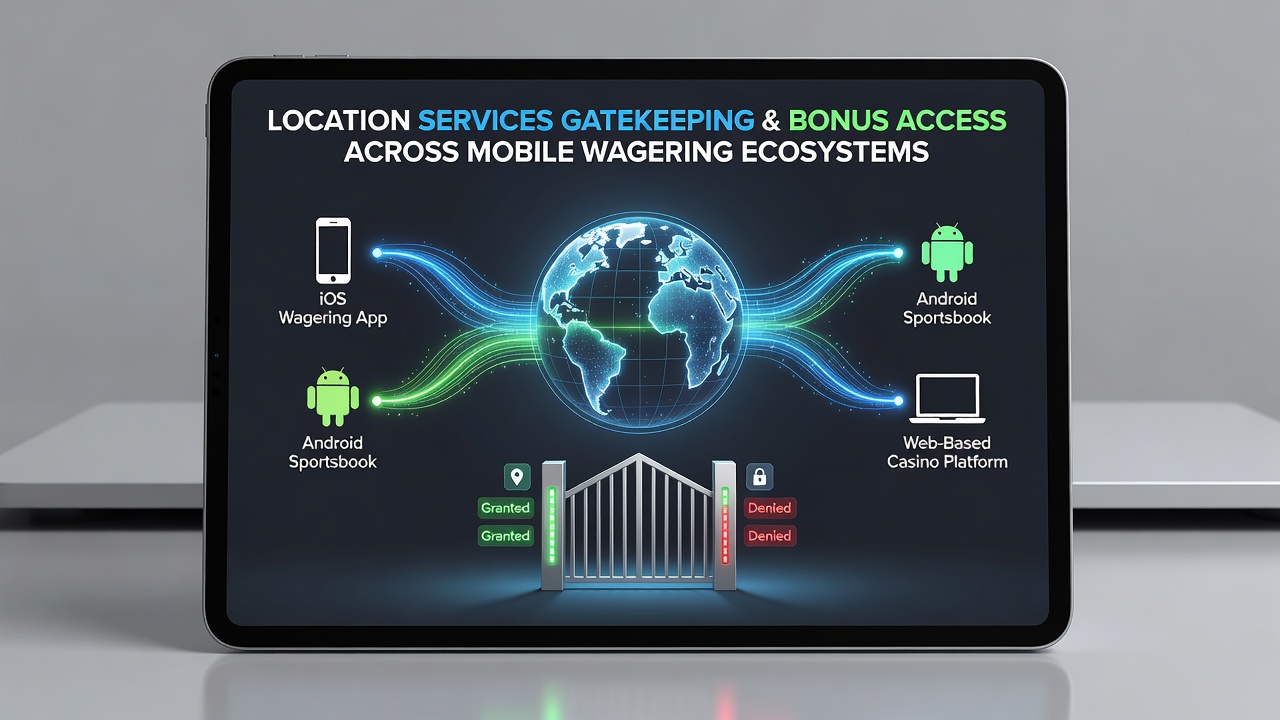
Data from regulatory filings shows location services now serve as the primary gatekeeper for bonus eligibility in mobile wagering applications, restricting promotional offers to users within approved geographic zones. Operators integrate GPS, Wi-Fi triangulation, and IP address verification to confirm a player's position before unlocking deposit matches, free spins, or enhanced odds. This approach aligns with licensing conditions that limit activity to specific jurisdictions and prevent bonus abuse across borders.
Geo-Fencing Mechanics in Practice
Mobile apps request continuous or on-demand location permissions at login and again during bonus activation sequences. Systems compare real-time coordinates against preloaded boundary maps that follow state or provincial lines, while also cross-checking against known VPN endpoints and proxy servers. When a device falls outside permitted areas, bonus claims get blocked automatically, and users receive notifications directing them to standard game modes instead. Operators update these maps regularly to reflect new regulatory approvals or changes in tribal compacts.
Studies conducted by gaming technology providers indicate that over 85 percent of bonus redemptions in the United States during the first half of 2026 occurred inside the exact county or state boundaries set by each platform. Accuracy rates exceed 99 percent when multiple location signals combine, though urban environments with dense building interference sometimes require fallback to cellular tower data.
Regulatory Drivers Behind Location Controls
State gaming commissions require operators to demonstrate strict adherence to geographic restrictions before issuing or renewing licenses. Nevada's Gaming Control Board, for example, mandates documented proof that every bonus transaction originated inside state lines, with audit logs retained for at least three years. Similar requirements appear in New Jersey, Pennsylvania, and Michigan regulatory frameworks, each enforcing distinct buffer zones around borders to avoid spillover into neighboring jurisdictions.
According to reports from the American Gaming Association, location verification protocols reduced unauthorized bonus claims by 72 percent between 2024 and 2026 across participating states. These measures also support tax collection accuracy, since bonuses tied to in-state activity generate reportable revenue streams that operators must reconcile monthly.
Impact on Player Behavior and Platform Design
Users traveling between states often encounter sudden loss of promotional access, prompting many to plan wagering sessions around home-region availability. Applications now include interactive maps that display active bonus zones before users attempt claims, reducing support ticket volume related to denied promotions. Some platforms introduce time-limited grace periods when location signals briefly fluctuate, allowing sessions to continue if the device returns to an approved area within minutes.
Platform developers continue refining fallback systems that combine Bluetooth beacons near approved venues with traditional satellite data. Research published in the Journal of Gambling Studies notes that hybrid verification lowered false-negative blocks by 41 percent in controlled trials conducted through mid-2026. These improvements matter most during peak travel periods such as October, when sports betting volume rises and users frequently cross state lines for events.
Technical Challenges and Circumvention Attempts
Attempts to spoof location data through modified operating systems or third-party applications trigger additional security layers, including device fingerprinting and behavioral analysis. When anomalies appear, accounts face temporary holds until manual verification occurs. Industry data indicates that fewer than 3 percent of detected circumvention cases result in successful bonus redemption, largely because operators maintain updated lists of known spoofing tools and flag associated device identifiers.
Operators also monitor withdrawal patterns that follow unusual location jumps, flagging accounts for review when large bonus-derived balances move shortly after apparent travel. This layered approach helps maintain compliance while preserving fair access for legitimate users who remain within approved territories.
Future Developments in Location-Based Controls
Emerging standards under discussion among multi-state regulatory coalitions aim to create shared mapping databases that update in real time across platforms. Such systems would allow seamless bonus access when users move between cooperating jurisdictions while still blocking activity outside licensed regions. Pilot programs scheduled for late 2026 in several Midwest states are expected to test these interoperable frameworks against current standalone solutions.
Observers note that continued refinement of location gatekeeping remains essential as more states authorize mobile wagering and as cross-border partnerships expand. The combination of precise satellite data, regulatory mapping, and behavioral safeguards continues to shape how bonuses reach eligible players without violating geographic limits.
Conclusion
Location services have become integral to bonus distribution across mobile wagering ecosystems, enforcing regulatory boundaries while supporting compliance and revenue tracking. As verification technology advances and regulatory coordination improves, these systems are likely to grow more precise, reducing friction for compliant users while maintaining strict controls on promotional access.